

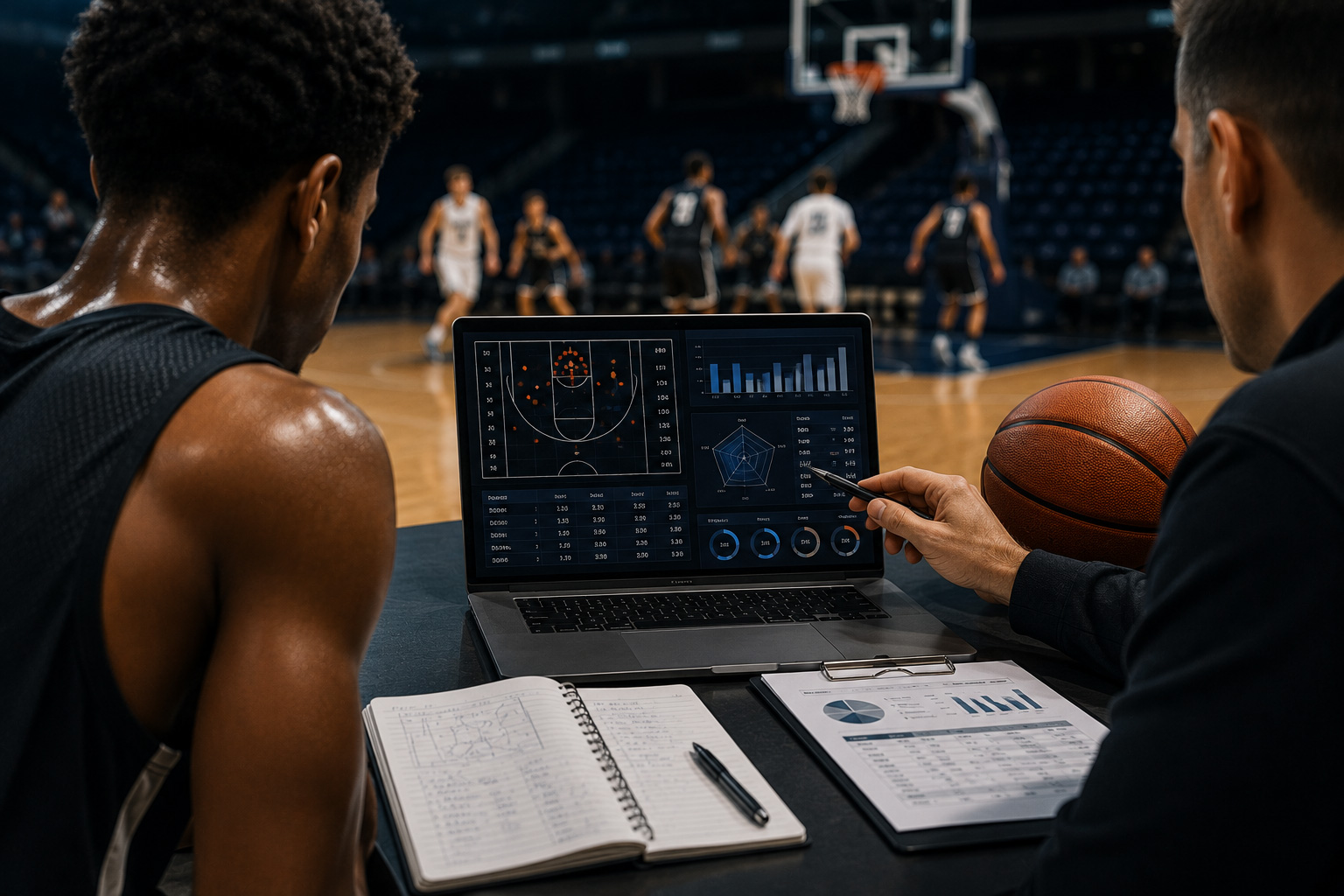
How Basketball Statistics Help You Get Signed
Every basketball player dreams of signing a professional contract, but talent alone isn’t always enough. Coaches, scouts, and agents need evidence that you can consistently perform at a high level. That’s where basketball statistics become one of the most valuable tools in your career.
Statistics don’t tell the whole story, but they help paint an objective picture of your performance. Combined with game film and quality competition, player statistics can significantly improve your chances of earning professional basketball opportunities.
Why Basketball Statistics Matter
Professional teams evaluate hundreds of players every year.
Watching every full game isn’t always practical, so statistics provide coaches with a quick snapshot of your production and consistency.
Instead of relying solely on opinions, teams can compare players using measurable performance over an entire season.
Statistics Build Credibility
Anyone can create a highlight reel showing their best plays.
Statistics are different.
Verified player statistics demonstrate how you performed over multiple games, against different opponents, and in a variety of situations.
Consistent numbers often carry far more weight than a single spectacular performance.
What Statistics Do Coaches Look At?
The answer depends on your position and role.
Common basketball statistics include:
- Points per game
- Rebounds
- Assists
- Steals
- Blocks
- Turnovers
- Minutes played
- Field goal percentage
- Three-point percentage
- Free throw percentage
These numbers help coaches understand how you contribute beyond simply scoring.
Efficiency Matters More Than Volume
Scoring 30 points sounds impressive.
Scoring 30 points while taking 35 shots tells a different story.
Professional coaches look beyond raw totals and consider efficiency.
They want players who:
- Make smart decisions.
- Take quality shots.
- Protect the basketball.
- Contribute in multiple areas.
- Help their team win.
Efficiency often separates professional players from talented amateurs.
Statistics Tell the Story of Consistency
Professional basketball is a long season.
Teams aren’t looking for players who have one great game followed by three poor performances.
Consistent statistics across multiple games demonstrate reliability.
Coaches value players they know they can depend on every night.
Different Positions, Different Numbers
Not every player should average 25 points.
For example:
Point Guards
- Assists
- Turnover ratio
- Decision making
- Shooting efficiency
Wings
- Scoring
- Perimeter defence
- Three-point shooting
- Rebounding
Forwards
- Rebounds
- Interior scoring
- Defensive versatility
- Physicality
Centers
- Rebounding
- Blocks
- Rim protection
- Screen setting
- Finishing around the basket
Great coaches evaluate players within the context of their role.
Statistics Support Your Highlight Reel
A highlight reel creates interest.
Statistics support the story.
Imagine two players with similar highlight videos.
Player A averages:
- 21 points
- 8 rebounds
- 5 assists
Player B averages:
- 11 points
- 3 rebounds
- 2 assists
While numbers aren’t everything, they help provide important context when coaches evaluate talent.
Statistics Help Agents Market Players
Basketball agents regularly present player profiles to professional clubs.
Those profiles often include:
- Career averages
- Shooting percentages
- Awards
- League rankings
- Season statistics
- Individual achievements
Verified numbers make it easier for agents to demonstrate a player’s value.
Numbers Don’t Replace Game Film
Statistics should never be viewed in isolation.
Professional coaches almost always combine statistics with:
- Full game footage
- Highlight reels
- Live evaluations
- Player references
- Basketball IQ
- Character
Great numbers without quality game film raise questions.
Likewise, great game film without statistics makes it harder to measure consistency.
The strongest basketball profile includes both.
Don’t Chase Statistics
One of the biggest mistakes players make is trying to inflate their numbers.
Professional coaches quickly recognise players who:
- Force difficult shots.
- Ignore teammates.
- Gamble defensively.
- Chase personal records.
- Play selfish basketball.
Winning basketball will always impress coaches more than empty statistics.
Keep Accurate Records
Throughout your career, maintain records of:
- Season averages
- Career statistics
- Awards
- Championships
- Team achievements
- Individual honours
These become valuable assets as you progress through higher levels of competition.
How Statistics Strengthen Your Basketball Resume
A professional basketball résumé should include:
- Player profile
- Playing history
- Height and position
- Career achievements
- Verified statistics
- Highlight reel
- Full game film
- Coach references
Statistics give coaches confidence that your performance is backed by measurable results.
Final Thoughts
Basketball statistics won’t earn you a professional contract on their own, but they can significantly strengthen your profile.
When combined with quality game film, competitive experience, strong basketball IQ, and a professional attitude, verified statistics help coaches, scouts, and agents evaluate your game with greater confidence.
The goal isn’t simply to put up impressive numbers—it’s to consistently contribute to winning basketball. When your statistics reflect your impact on the court, they become one of the most powerful tools in helping you earn professional basketball opportunities.
No Comments
Sorry, the comment form is closed at this time.