

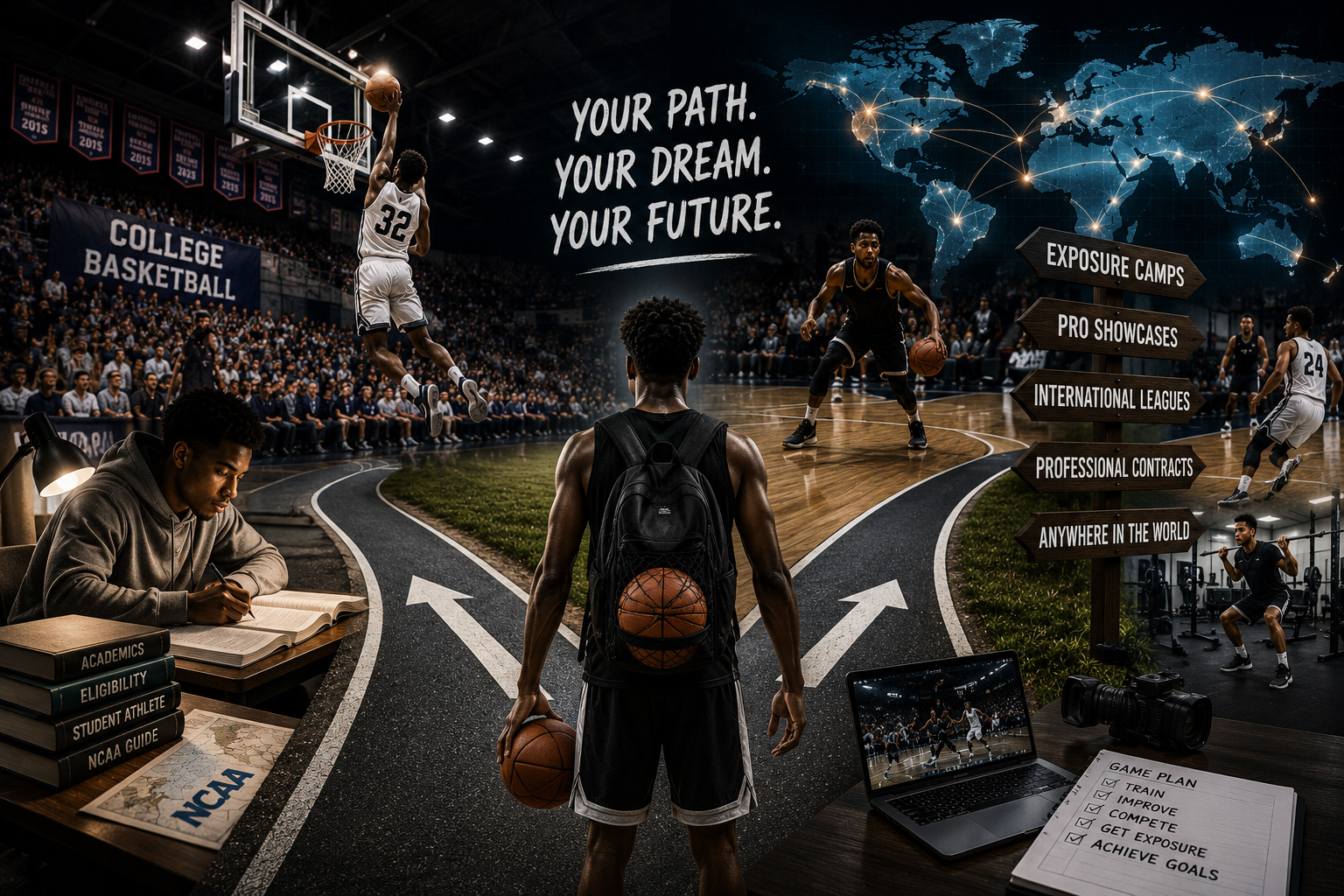
Can You Become a Professional Basketball Player Without College?
One of the most common questions aspiring players ask is:
“Can I become a professional basketball player without playing college basketball?”
The short answer is yes.
While college basketball has helped many players launch successful professional careers, it is not the only pathway. Every year, players from clubs, academies, semi-professional leagues, international competitions, and alternative development programs earn professional basketball contracts around the world.
The key isn’t whether you attended college—it’s whether you can prove you’re capable of playing at the professional level.
College Is One Path, Not the Only Path
College basketball provides many advantages:
- Regular competition
- Coaching
- Strength and conditioning
- Exposure
- Team structure
- Video and statistics
These resources can help players develop, but they aren’t exclusive to college programs.
Professional clubs ultimately evaluate what you can do today, not where you developed.
What Professional Teams Really Care About
When coaches evaluate players, they rarely begin by asking where you went to school.
Instead, they ask questions like:
- Can this player help us win?
- How does this player perform against quality competition?
- Do they have recent game film?
- Are their statistics consistent?
- Are they coachable?
- Will they fit our team?
If you can answer those questions with your performance, your basketball background becomes less important.
Build Your Own Basketball Resume
If you haven’t played college basketball, it’s even more important to build a strong basketball profile.
This should include:
- Competitive playing experience
- Full-game video
- Highlight reel
- Verified player statistics
- Basketball résumé
- References from coaches
- Current physical measurements
These tools allow coaches to evaluate you objectively.
Play Against Better Competition
One challenge for players outside the college system is finding quality competition.
Professional teams want to see how you perform against experienced players—not just local recreational leagues.
Seek opportunities to compete in:
- Basketball showcases
- Exposure camps
- Semi-professional leagues
- National leagues
- International tournaments
- Professional summer leagues
The higher the level of competition, the more valuable your experience becomes.
Continue Developing Your Skills
Without a college program, your development becomes your responsibility.
Focus on improving:
- Shooting
- Ball handling
- Defence
- Strength
- Conditioning
- Basketball IQ
- Recovery
- Nutrition
Professional players never stop improving, regardless of where they started.
Build Professional Habits
Professional basketball is about much more than talent.
Teams notice players who:
- Arrive on time
- Stay in shape
- Communicate well
- Accept coaching
- Work consistently
- Put the team first
- Maintain a positive attitude
Developing these habits early will help you transition into professional environments.
Exposure Is Essential
One of the biggest differences between college players and independent players is visibility.
College athletes often play in front of recruiters, while independent players usually need to create their own opportunities.
This can include:
- Attending exposure camps
- Playing in showcase events
- Joining professional development programs
- Networking with coaches
- Building an online player profile
- Sharing game film and statistics
The more people who can evaluate your game, the greater your chances of earning opportunities.
Learn From Every Opportunity
Not every opportunity will lead directly to a professional contract.
Some players begin in smaller leagues before moving to stronger competitions.
Every season helps you build:
- Experience
- Confidence
- Statistics
- Game film
- References
- Professional relationships
Think long-term rather than expecting immediate success.
Common Mistakes to Avoid
Players without a college background often make the mistake of believing they have no chance.
Other common mistakes include:
- Waiting to be discovered.
- Not recording games.
- Playing only low-level competition.
- Ignoring strength and conditioning.
- Failing to build a basketball résumé.
- Giving up after one rejection.
Professional basketball rewards persistence as much as talent.
Success Looks Different for Everyone
Not every player dreams of the NBA.
Many athletes enjoy long and rewarding careers in professional leagues across Europe, Asia, Australia, South America, the Middle East, and Africa.
Success might mean:
- Signing your first overseas contract.
- Playing professionally while travelling the world.
- Building a long-term basketball career.
- Coaching while continuing to play.
- Using basketball to create new opportunities.
There are many different paths to a successful basketball career.
Final Thoughts
Playing college basketball can be an excellent pathway into the professional game, but it is far from the only one.
Professional teams are ultimately looking for players who can perform, compete, and contribute. If you continue developing your skills, seek quality competition, build a professional basketball profile, and consistently create opportunities to showcase your ability, you can absolutely pursue a professional basketball career without a college background.
Your future won’t be determined solely by where you played—it will be determined by how well you prepare, how hard you work, and how effectively you demonstrate your value every time you step onto the court.
No Comments
Sorry, the comment form is closed at this time.